The unique beauty of mother-of-pearl takes center stage in watches by Patek Philippe, Rolex, Jaeger-LeCoultre, Panerai, Cartier, Bulgari and Zenith.
Mother-of-pearl is an iridescent, multicolored material that provides a protective inner layer in mollusk shells. The mullosk’s is inner lining is also called nacre. It is self-repairing and smooth. Nacre builds very slowly, layer by layer, for the duration of a mollusk’s lifetime. Watches with mother-of-pearl dials will never look quite the same. The dials are unique because each shell is unique and produces its own patterns. No two pieces of mother-of-pearl will look exactly alike.
Oysters, a type of mollusk, form pearls with nacre. When a foreign object enters a mollusk shell, the mollusk coats it with nacre as a protective measure. Nacre is highly resistant to certain natural environmental risks, including UV rays and salt water. Mother-of-pearl is also lightweight, which, in combination with its unique beauty, makes it a highly desirable watch dial material.
Let There Be Light
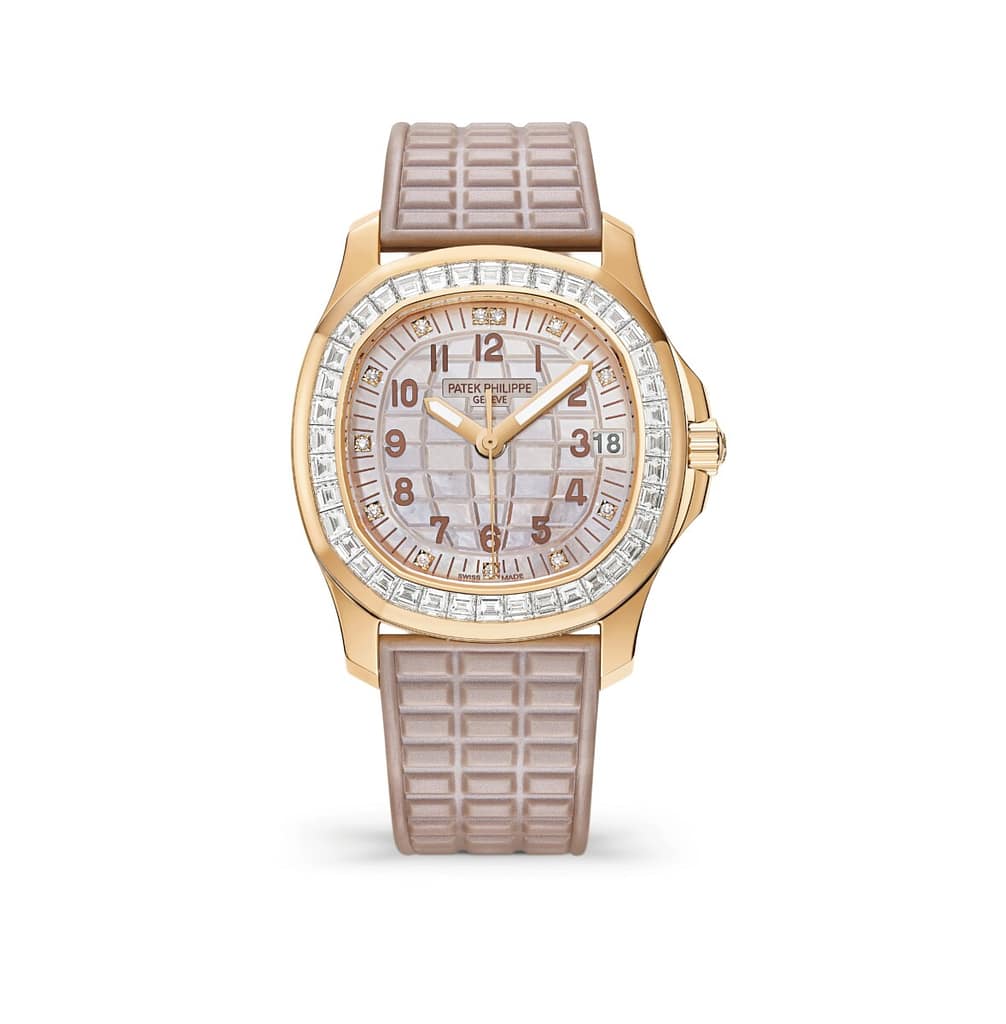
Patek Philippe holds the distinction of being the oldest family-owned watchmaker in Geneva, the capital of watchmaking. The brand boasts exceptional mechanics and an unwavering attention to detail. Patek Philippe’s Aquanaut collection made its debut in 1997 “as a statement of casual elegance,” according to the brand. “The Aquanaut is immediately recognizable with its distinctive embossed pattern that runs from the dial to the strap.” In 2004, Patek added the Aquanaut Luce to the collection.
Luce is Italian for light. Every Aquanaut Luce timepiece has a gem-set bezel that creates a luminous frame for the dial. The Aquanaut Luce above features an 18K rose gold case and a flexible composite strap. Patek Philippe’s craftspeople engrave the mother-of-pearl dial with a checkerboard pattern and surround it with 40 baguette-cut diamonds.
Flipping Out
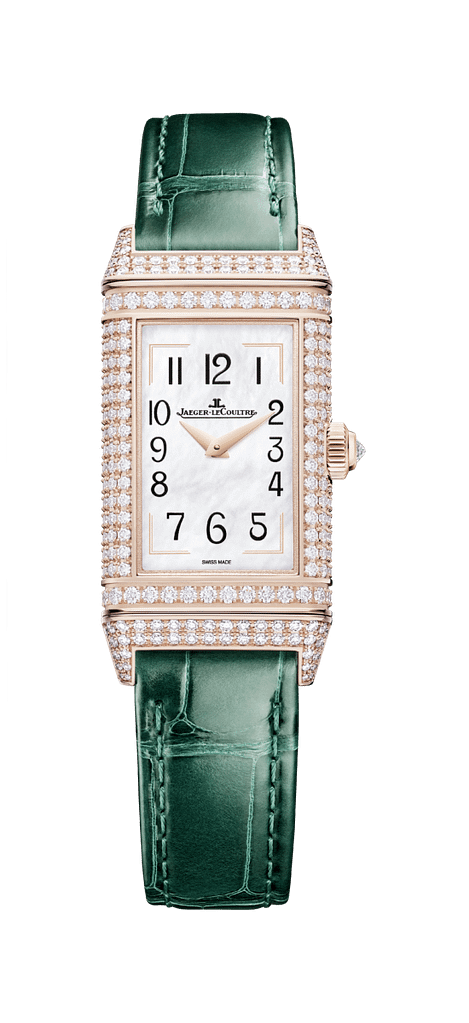
The Jaeger-LeCoultre Reverso is arguably the most iconic of all of the brand’s collections. The watch’s case can reverse—flip over—to a solid caseback, a second dial or an elegantly decorated motif. The first Reverso was a true sports tool watch made for polo players in the early 1930s. It was born from a simple need: to protect a watch’s dial from the hard knocks and “rigors of the game,” according to the brand. René-Alfred Chauvot, an industrial designer, designed the watch’s case and its swiveling function and filed a patent for his new creation in 1931.
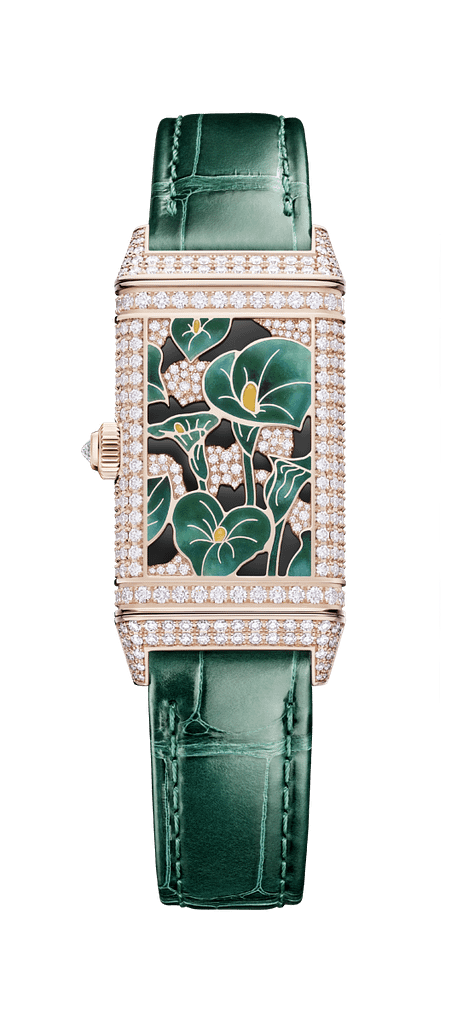
The name Reverso, is Latin for “I turn.” Jacques-David LeCoultre and his partner, César de Trey, registered the name in 1931. The Reverso is a “quintessential embodiment of the spirit of its era: blending modernity, Art Deco style, sport DNA and innovation,” according to Jaeger-LeCoultre. The Reverso One Precious Flower watch pictured here showcases the timepiece’s Art Deco design influence. It features a diamond pavé dial and lugs surrounding its mother-of-pearl dial. The reverse side of the timepiece has a tropical design with flowers crafted of Grand Feu Champlevé enamel, snow-set diamonds and black lacquer.
President Time
The Rolex Oyster Perpetual Day-Date is celebrating its 70th anniversary this year. The brand introduced in 1956, it was the first calendar wristwatch to indicate the day of the week spelled out in full on the dial. The timepiece has graced the wrists of U.S. presidents and other luminaries across the world. “The Day-Date officially entered the history books on President Lyndon B. Johnson’s wrist when he moved into the White House in 1963,” according to the brand.
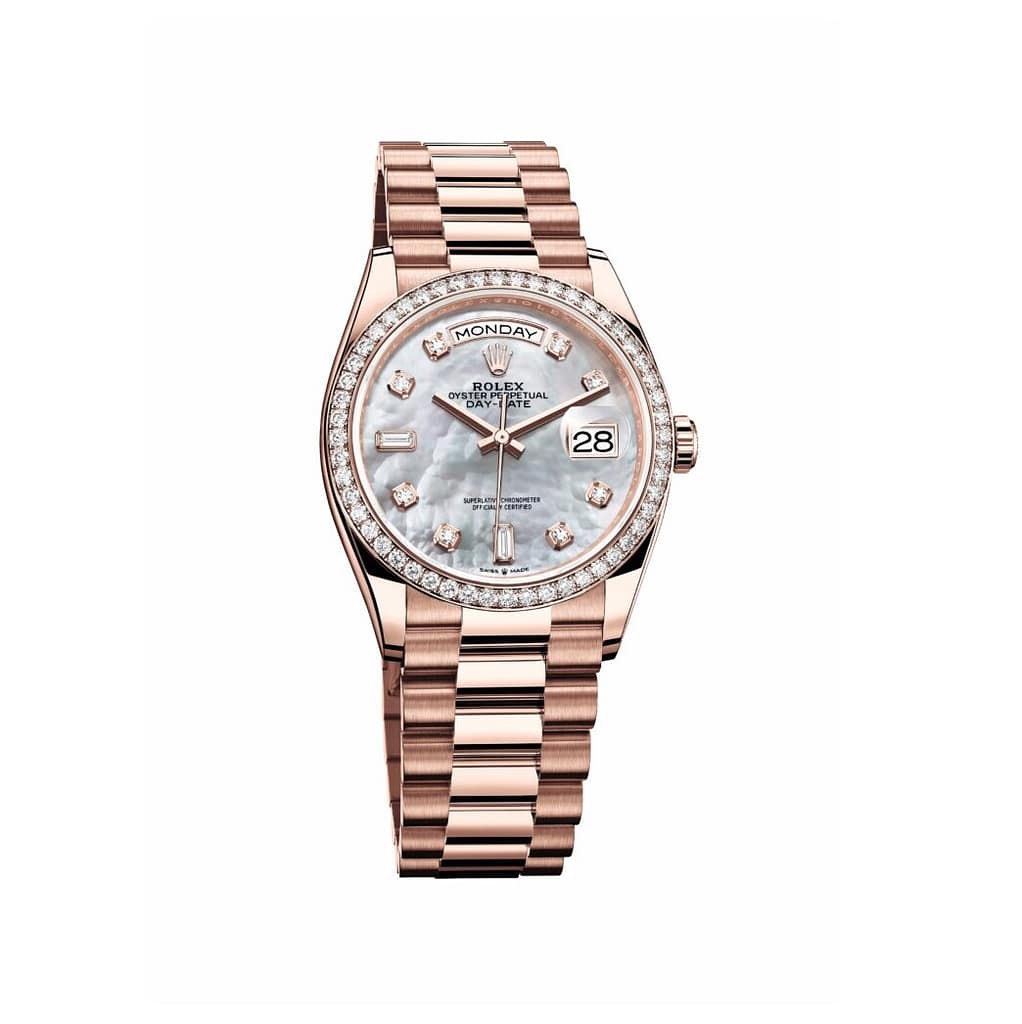
“From that moment, the watch began to earn its reputation as the ‘presidents’ watch,’ becoming the accessory of choice for leaders and other influential individuals.” Rolex Day-Date models feature the aptly named President bracelet, which consists of three semicircular links. The Oyster Perpetual Day-Date has been available in numerous dial and metal variations, over its decades-long history. Rolex crafts Day-Dates exclusively in precious metals, including platinum and 18K rose, white, and yellow gold. The rose gold timepiece pictured above features a mother-of-pearl dial accented with diamond hour markers and a diamond bezel.
Take Me To The Moon
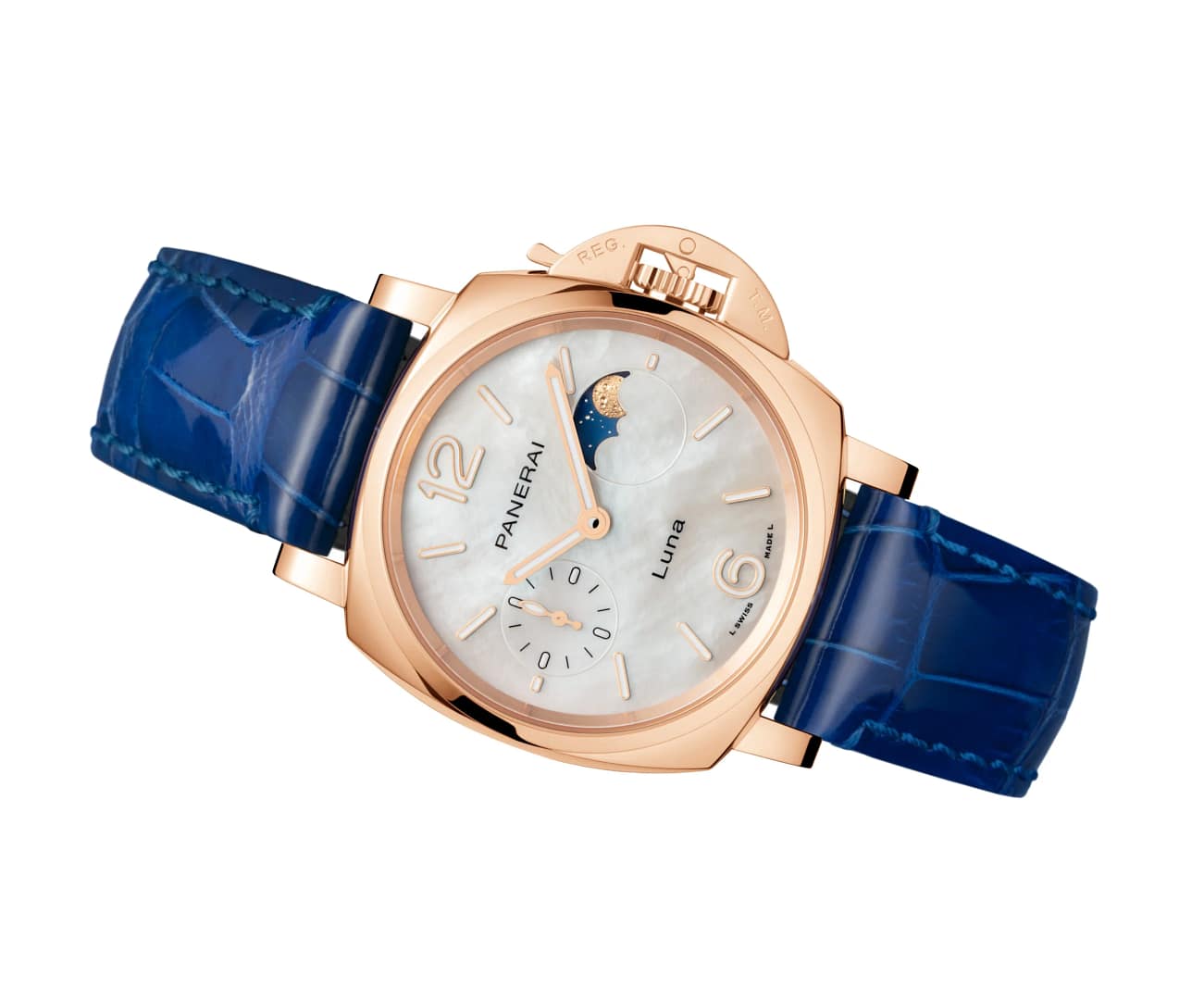
Giovanni Panerai first opened his watch store in 1860 in Florence, Italy. But Panerai’s business was not just a shop: he also ran the city’s first watchmaking school on its premises. Panerai is well-known in watch circles for providing the first diving watches for the Italian Royal Navy. The brand’s design code is firmly rooted in robustness and reliability in challenging conditions. The hinged crown protector found in the Luminor and Submersible collections is one of Panerai’s distinctive design features.
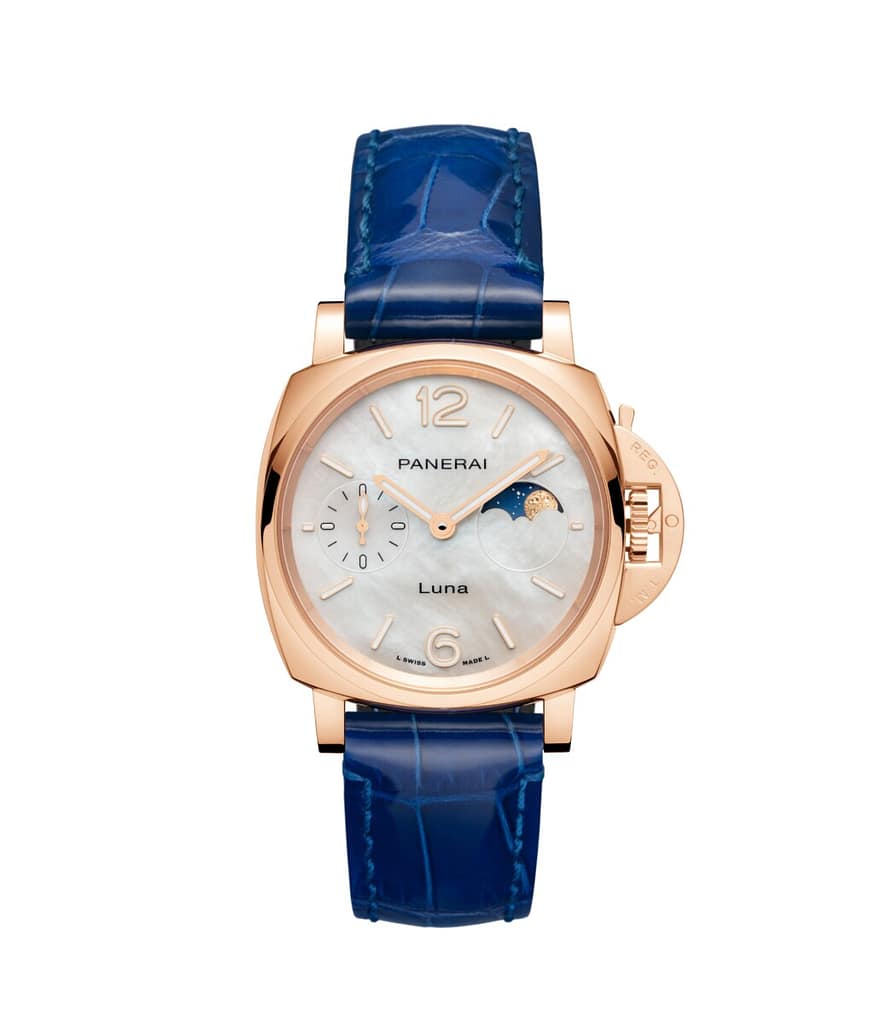
The crown protector’s original design had an essential functional purpose: to keep water from entering the watch via the crown. Panerai’s Luminor Due TuttoOro Luna watch’s strong association with the sea, is evident, not just with the crown protector but also in its lustrous mother-of-pearl dial. The watch gets its name from the Latin luna, meaning moon, and features a moonphase as well as a stop-seconds function. The watch is made of Panerai’s proprietary 18-k Goldtech and comes on either an all-gold bracelet or a blue alligator strap.
Wrapped in Gold
Bulgari’s Serpenti collection was first introduced in 1948 in the form of a bracelet watch that sinuously wrapped around the wrist. Serpenti is Italian for serpent. The watch’s dial and bezel form a shape resembling a snake’s head.In 1963, Elizabeth Taylor wore her Serpenti watch in the movie “Cleopatra,” and the timepiece instantly rose to global fame. Now truly iconic, the Serpenti collection includes bracelets, necklaces and rings in addition to watches.
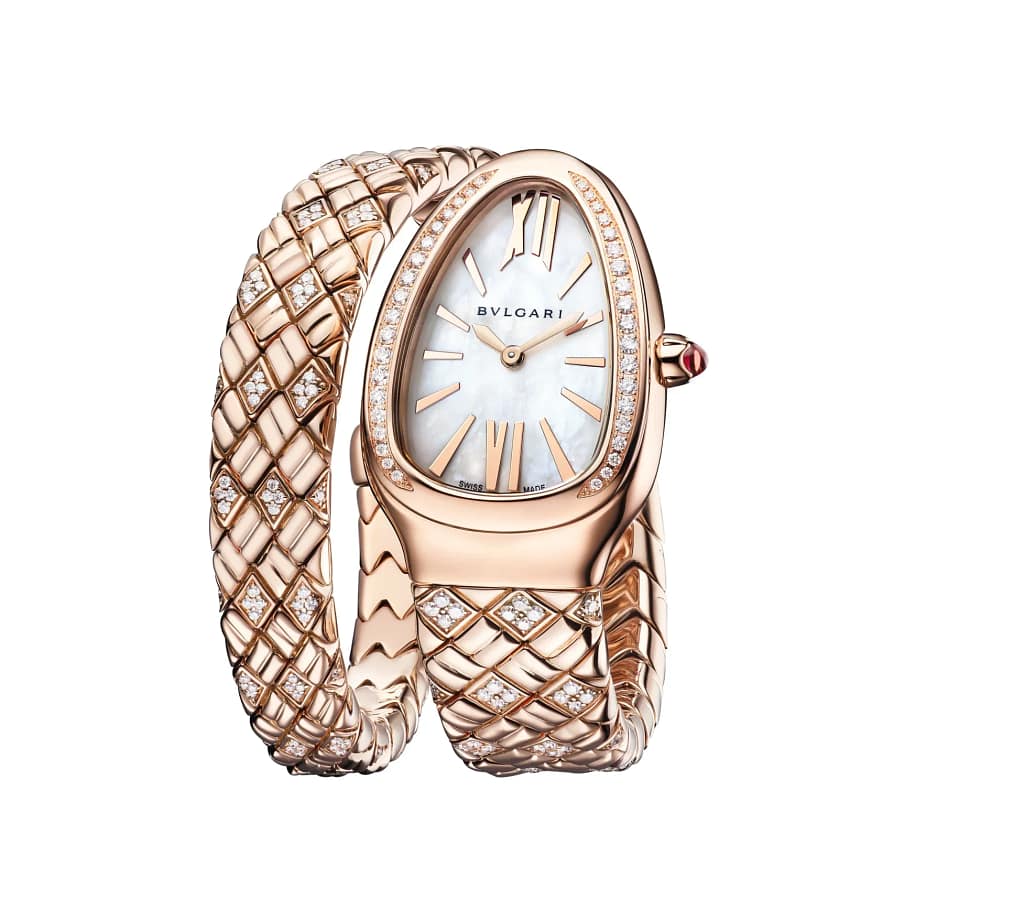
“Combining the audacity of Serpenti and the legend of Spiga, the Italian word for spike, the Serpenti Spiga watch joins the modern with the ancient,” according to the brand. The watch “echoes the idea of infinity with its abstract wheat stalk pattern carved into the bracelet itself.” The Serpenti Spiga 18-k rose gold watch pictured here has a single-spiral bracelet set with diamonds and a mother-of-pearl dial.
Precious Time
Cartier named its Baignoire watch collection after the French word baignoire, meaning bath, a nod to its signature oval shape. Cartier is well-known for its unusual watch case shapes, which first appeared during the 1910s.
Louis Joseph Cartier, a grandson of the brand’s founder Louis-François Cartier, revolutionized modern watchmaking at Cartier from both a mechanical and stylistic standpoint.
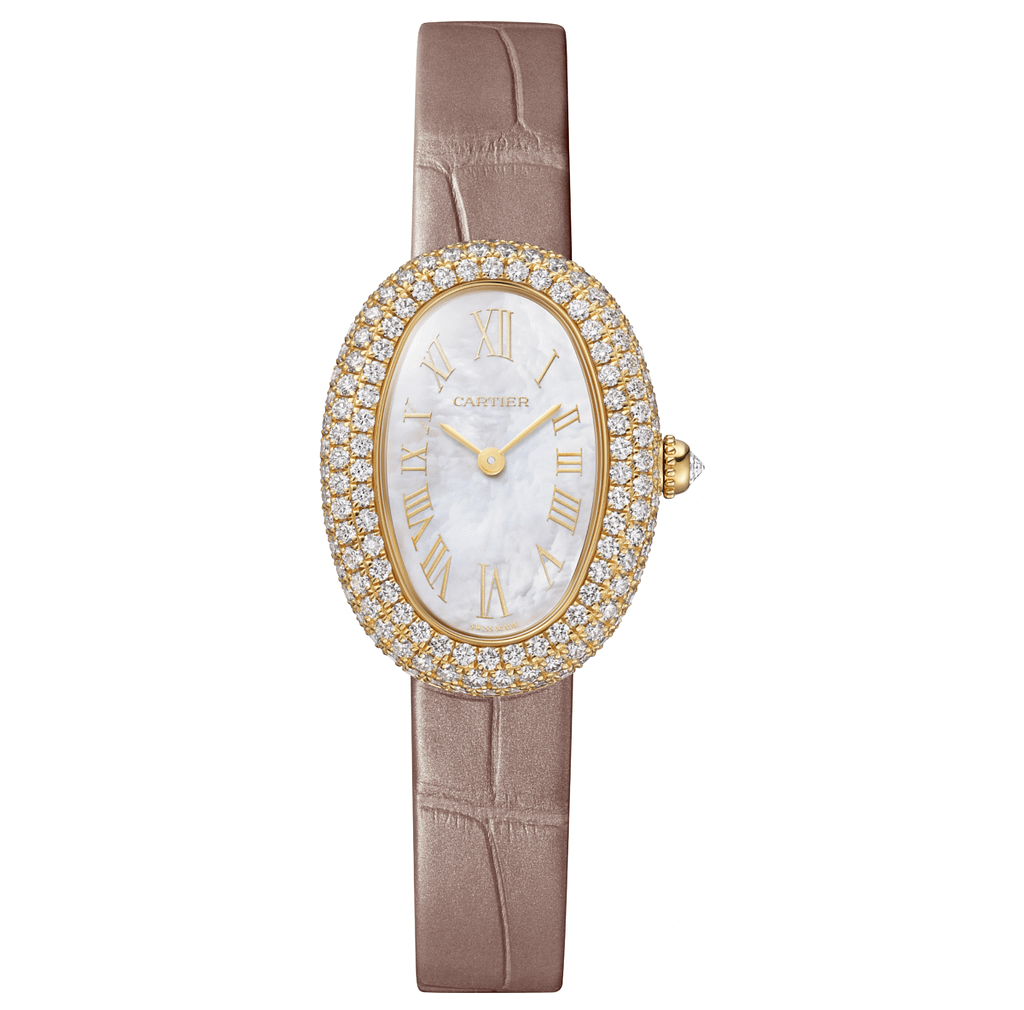
Cartier demonstrated its prowess in crafting watchmaking forms with the 1912 design of the watch that it would later christen the Baignoire. The modern Baignoire watch went by another name in the 1950s. “In 1958, the Ovale cintré watch first appeared, and in 1973 it was named the Baignoire.” The Bagnoire watch pictured above has a mother-of-pearl dial bordered by a case of 18-k yellow gold set with diamonds. A single diamond decorates its crown.
A Legendary Movement
The new Zenith Chronomaster Sport’s mechanics are based on the brand’s El Primero movement which was introduced more than 50 years ago. The groundbreaking El Primero is the world’s first automatic integrated high-frequency caliber and is world-renowned for its timekeeping accuracy to this day. The timepiece features a mother-of-pearl dial with three counters at the 3, 6, and 9 o’clock positions, a design nod to the original El Primero.
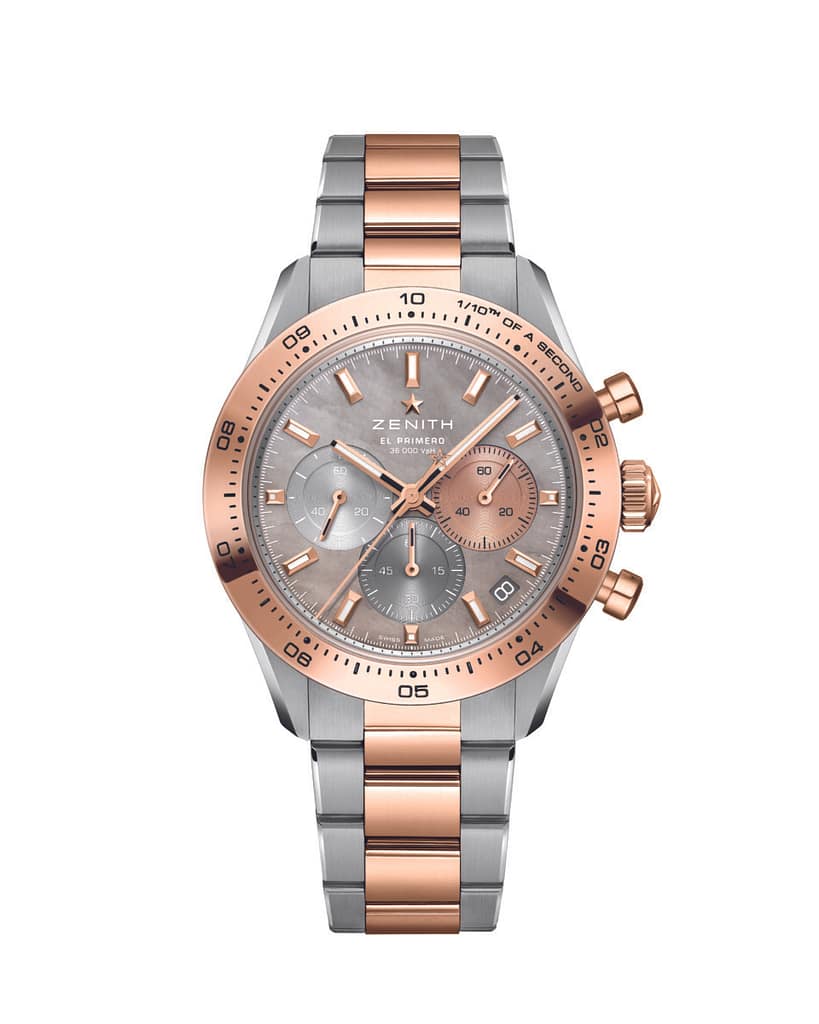
The timepiece “is designed to seamlessly move across contexts, maintaining its mechanical authority while adapting effortlessly to its surroundings,” according to the brand. The watch is crafted of steel and 18-k rose gold. It will be produced in a limited quantity of just 50 pieces.