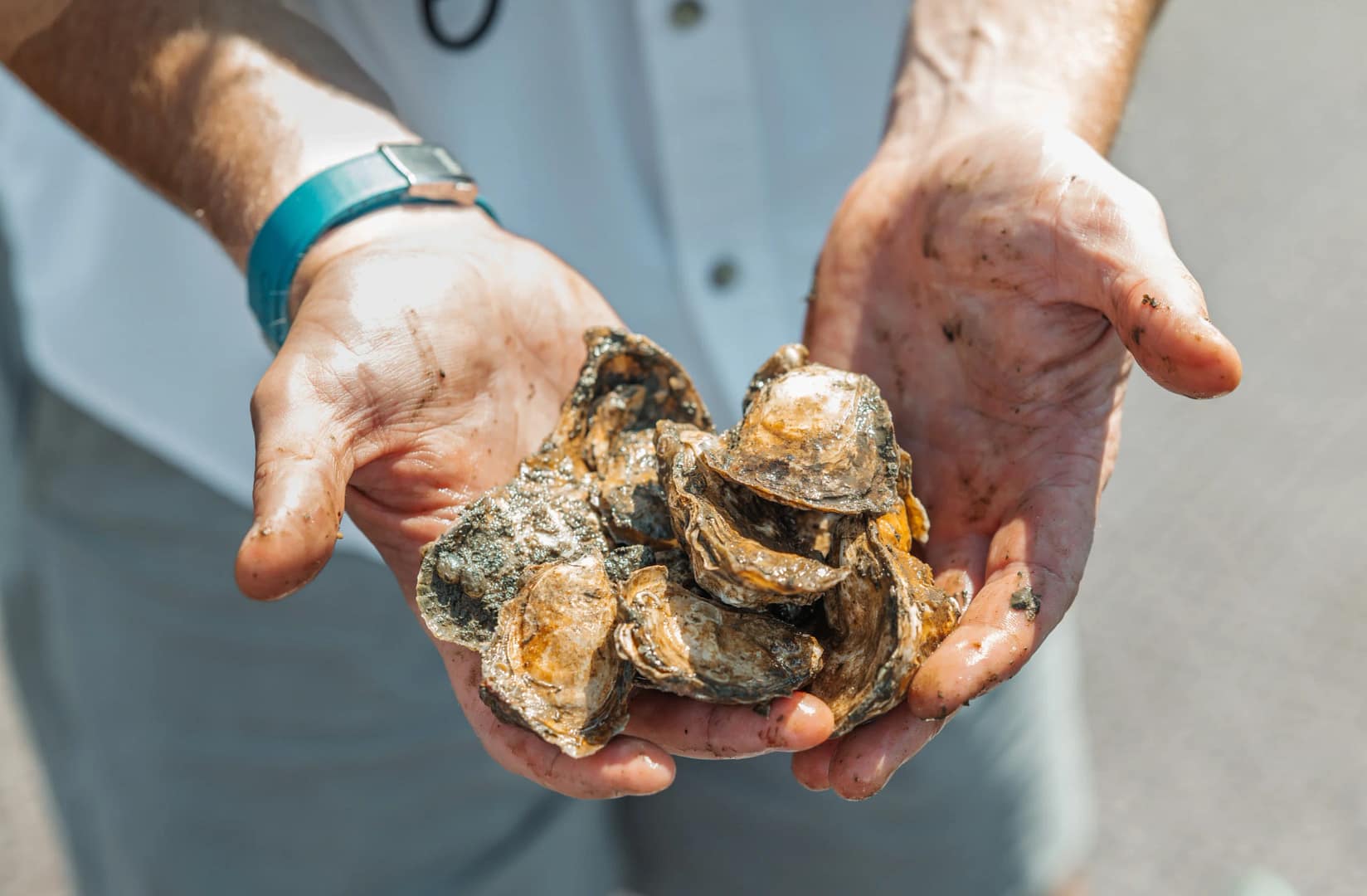
Oris is a long-standing supporter of ocean conservation and has joined an effort to introduce a billion oysters to restore New York Harbor.
Oysters play a critical role in our aquatic ecosystems, including filtering the water and fostering biodiversity. Oyster reefs can also provide a natural storm barrier by reducing the size of waves and flooding, thereby protecting shores from erosion. In New York Harbor, a once-thriving oyster population has been virtually extinct since the 1990s. As a part of its worldwide Change for the Better program, Hölstein, Switzerland-based Oris is taking an active role in bringing the native species back through its support of New York City’s Billion Oyster Project.
The Billion Oyster Project’s aim is to plant one billion oysters in New York Harbor by 2035. The nonprofit was founded in 2014 by local educators Murray Fisher and Pete Malinowsky. They are in the process of restoring the harbor’s once healthy and biodiverse environment by sustainably rebuilding the oyster population.
“At one time, New York City had one of the largest oyster populations in the world,” said VJ Geronimo, Oris’ CEO – the Americas. “The estuary that was there was teeming with wildlife. But then, as time went on, sewage runoff from the city, dredging and commercial shipping severely damaged the Harbor.” New York’s waterways at one time had about 220,000 acres of oyster reefs.
An Expanding Network
Fisher and Malinowsky started the Billion Oyster Project at the Urban Assembly New York Harbor School, a public high school on New York’s Governors Island. The Harbor School has a maritime-focused curriculum with an emphasis on environmental stewardship and hands-on career preparation. Since 2014, the Billion Oyster Project has expanded to 100 schools across the city’s five boroughs. The Project collaborates with sustainability-focused organizations, and thousands of volunteers have taken part in the effort. Oris has organized volunteers to help work with the Project and has led several outings to Governors Island to participate in their work.

“We’ve done a lot of work around ocean conservation globally, through different projects over the years,” Geronimo said. “But this one is so close to home. Many New Yorkers don’t think about the ocean being pretty much in our backyard.” Normally, Oris seeks out conservation projects across the globe to support, but this time it was the Billion Oyster Project that reached out to them.
“They actually approached us because they knew we had supported other conservation efforts.” Geronimo said. “One of their board members is a watch collector and he reached out to us.” In 2022, Oris introduced a New York Harbor Limited Edition watch, with a portion of the proceeds from the sales donated to the project’s mission. Last year, the brand introduced the New York Harbor Limited Edition II watch with the same purpose.
A Group Effort
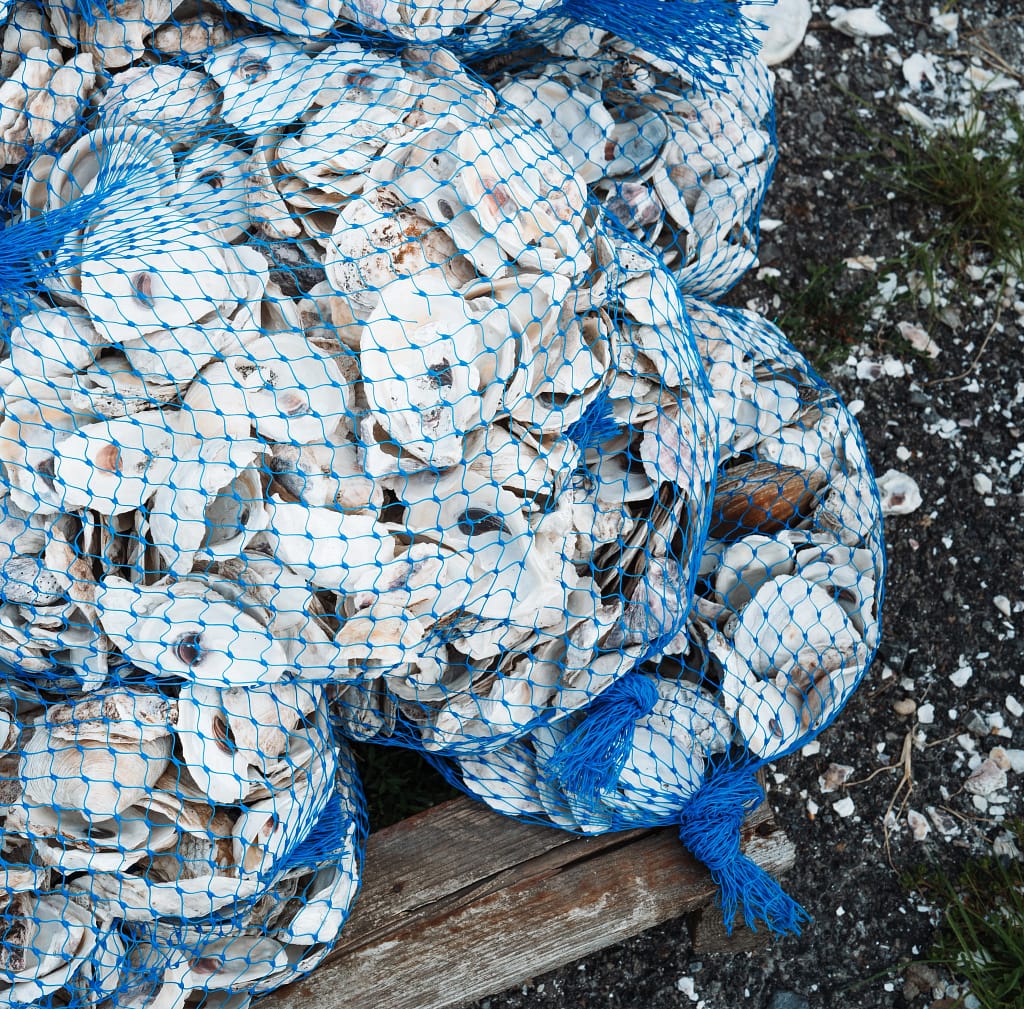
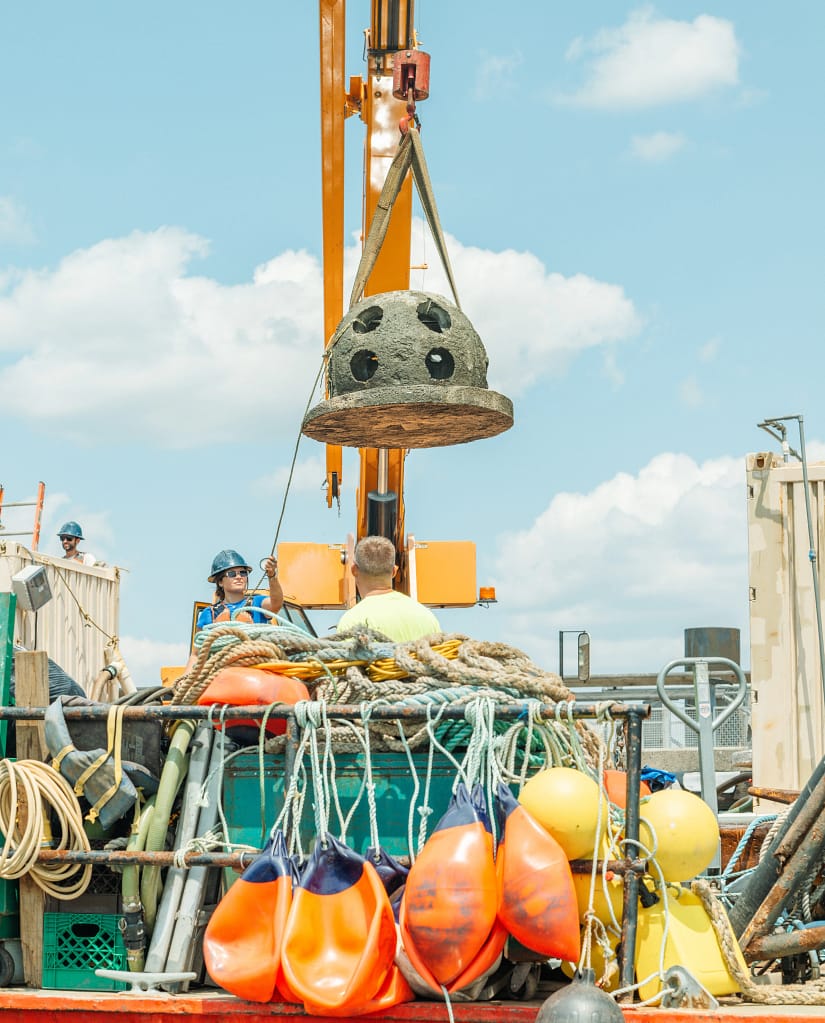
To date, 150 million oysters have been planted in New York Harbor, and the goal of one billion oysters may be reached by 2031, four years sooner than the 2035 goal. The oysters are cultivated using mollusk shells collected from about 75 restaurant partners in the city. The organization collects shells from the restaurants and brings them to Governors Island, where they are cured for about a year. After that, the shells and oyster larvae are put in cages or spherical structures and lowered into the water.
Walking the Walk
The educational aspect of the Billion Oyster Project is essential to its success, Geronimo said. “They’re trying to educate the next generation of people to take care of the Harbor. This work is full circle, which is so important. It gives the next generation a sense of ownership.”
Sustainability is a core value for Oris. The company has been fully carbon-neutral since 2021. In 2022, the brand published a sustainability report with a goal to reduce its global emissions by 10 percent a year for three years. As of their most recent report, Oris had achieved a 27.1 percent reduction. “We don’t just talk the talk, we walk the walk,” Geronimo said. “We actually go out and try to change things and try to make it better by our actions.
“Climate neutralism is a relatively straightforward process. You collect your carbon emissions and then you offset them and then you’re climate neutral,” he continued. “But we pledged to bring our carbon footprint down by reducing packaging and streamlining transportation logistics. Along with business travel, these are our biggest sources of carbon emissions as a company.
“We changed our packaging from heavier boxes with some plastic-based components to just recycled cardboard. It’s nicely put together, and still elegant, but also serves the purpose and takes our overall footprint down. Our employees track their emissions and are tasked with renting hybrid and electric cars while traveling.
“So that’s what we’re trying to do,” Geronimo said. “We’re not perfect, it’s just something we’re trying to do. That’s all. We’re trying to make it better.”